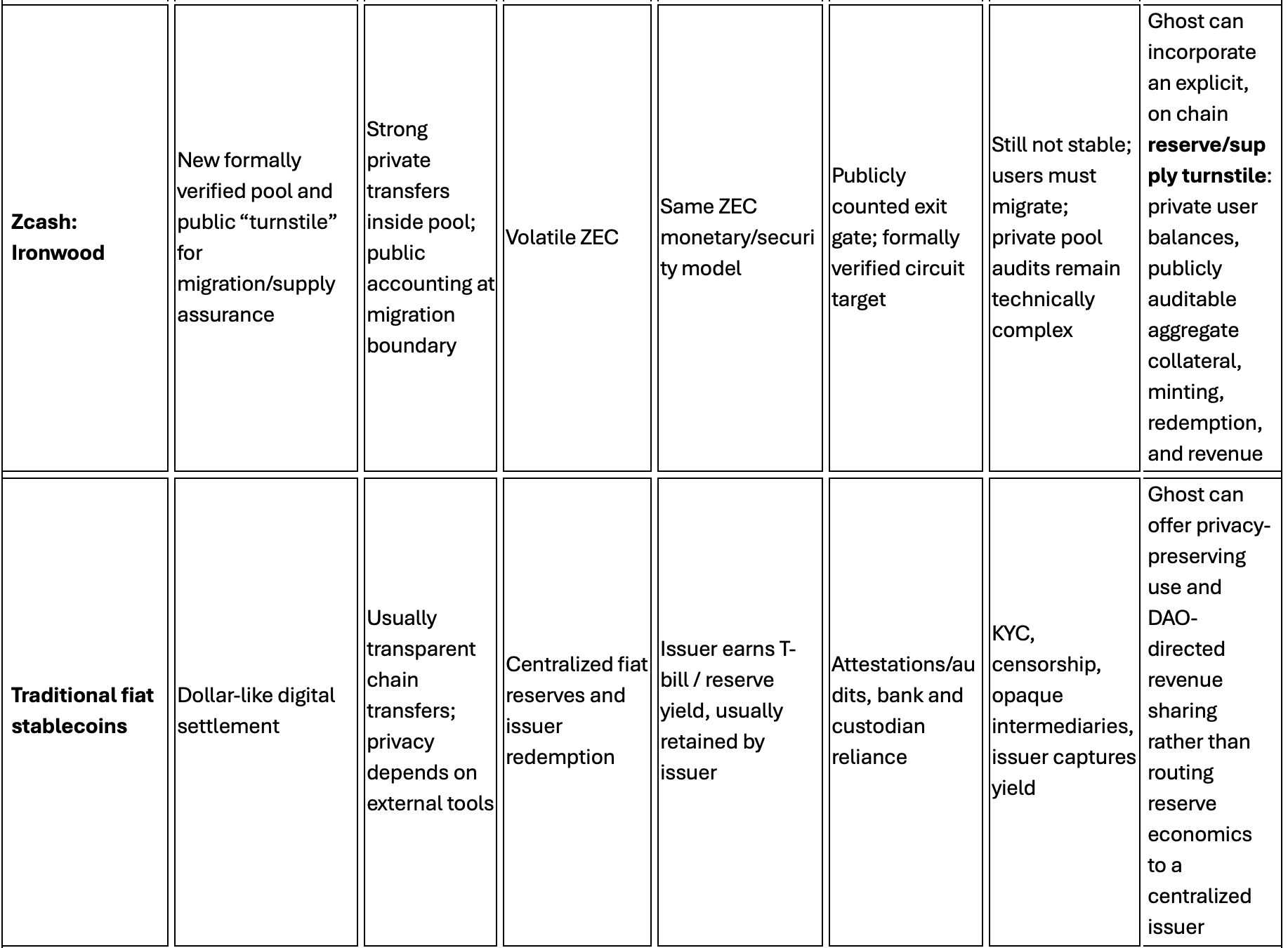
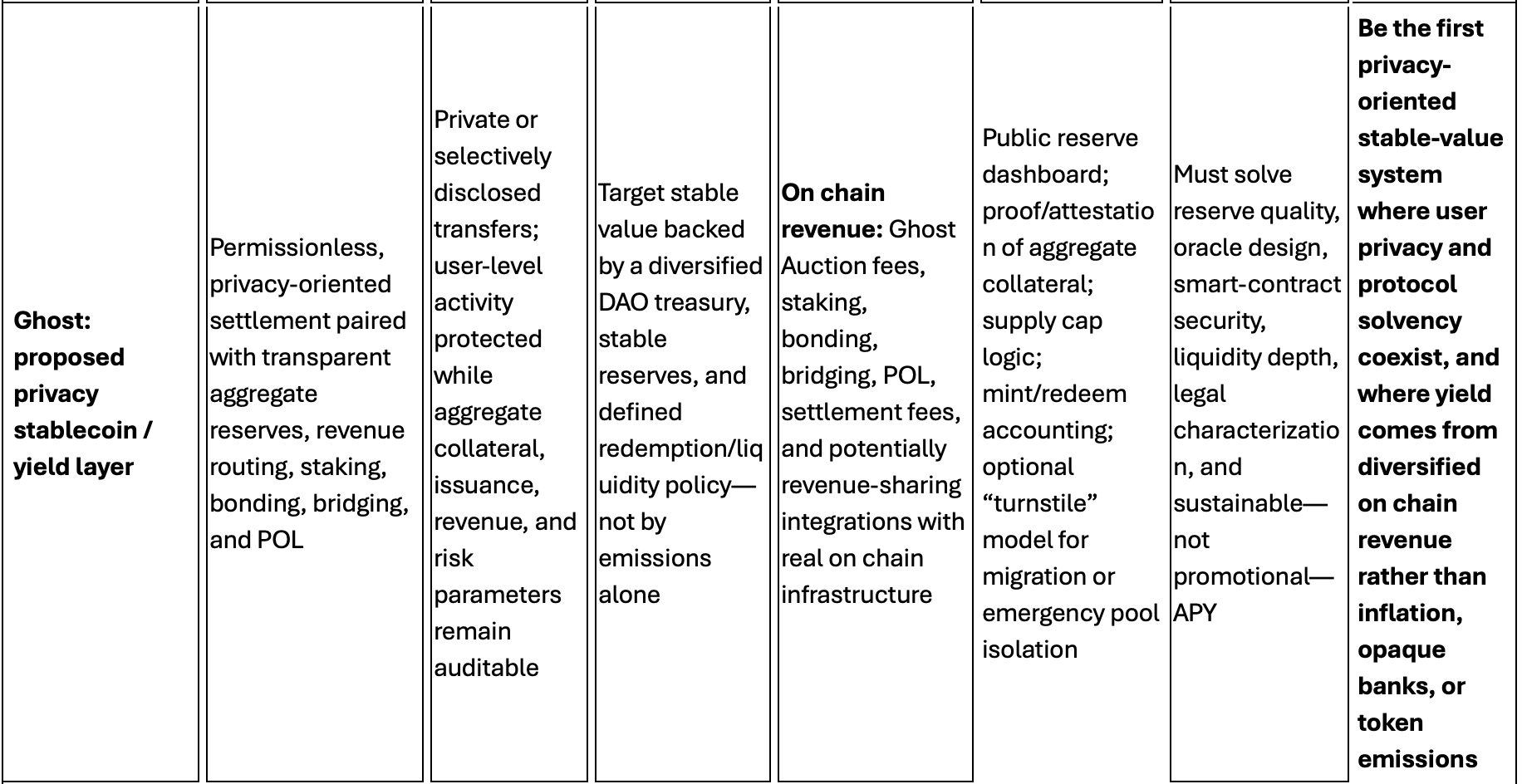
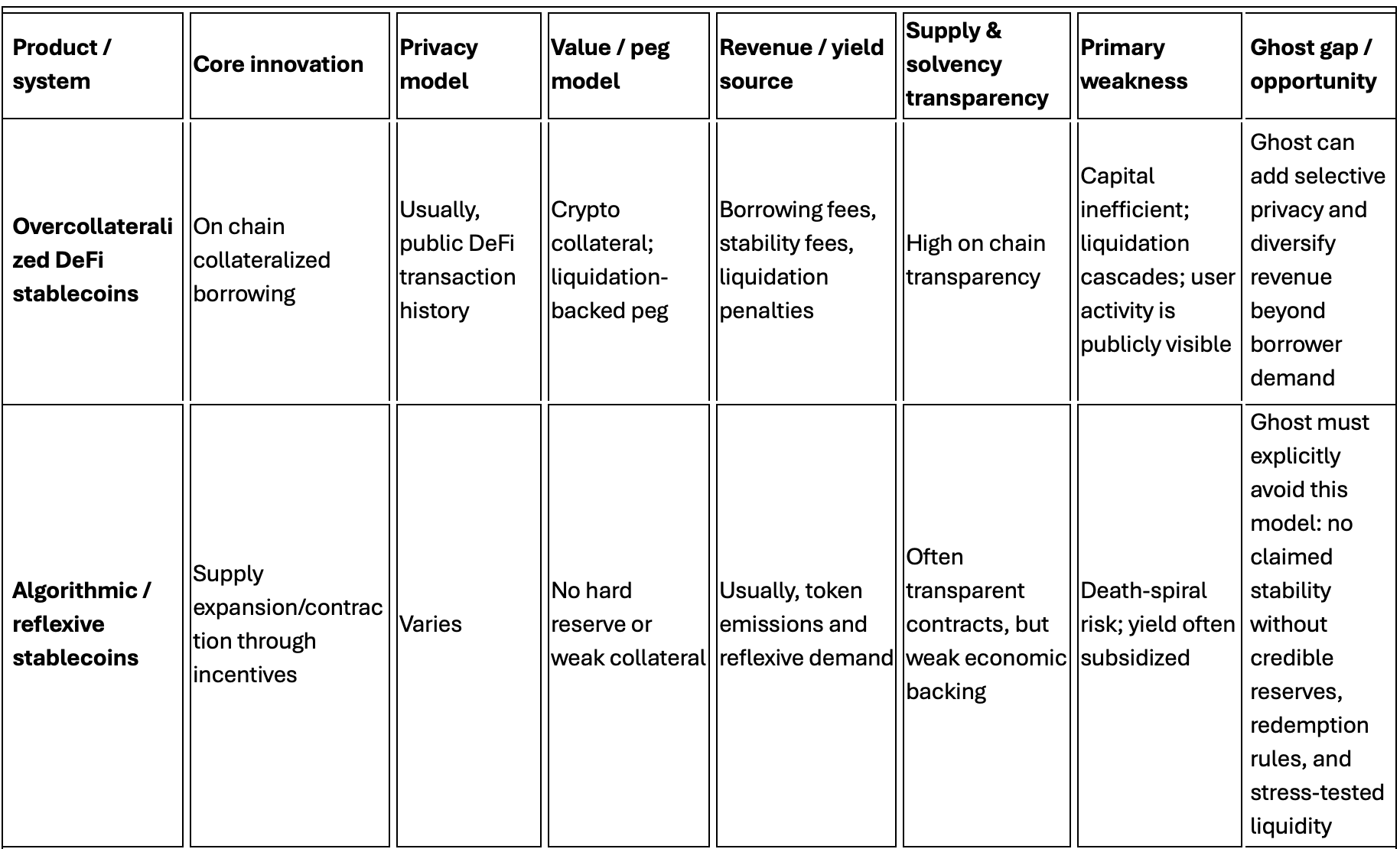
Research "From Cypherpunks to Zcash to Ghost DAO

I put together a summary description of the significant protocols that preceded and have lead to Ghost.

The opinions and proposals for design, treasury layer, revenue layer, and conclusion called out in the Chapter 12: “The Ghost DAO Opportunity” are those of my own.

Feel free to challenge and suggest edits directly into the Ghost section pages 50-53 directly or insert your comments.

Also, feel free to add a chappter, e.g. Olympus DAO, or Polkdaot.

For those that do not trust links…you won’t get the tables and graphs but the text from Chapter One, Two and Twelve is below.

I recommend Ghosties start following Eli Ben Sasson on Twitter to see if he gets curious about Ghost DAO. You will understand why if you make it to the zerocoin, zerocash and zCash chapters.

From Cypherpunks to Zcash to Ghost DAO Opportunity.

Chapter One- Timeline & Tables

Before the movement (1976 to 1991)
1976. Whitfield Diffie and Martin Hellman publish “New Directions in Cryptography” (Stanford). Until then, two people had to share a secret key ahead of time. Now strangers could set up a secure line in the open, and you could sign a message so anyone could check it was really you. Every step below rests on this.

1982 to 1983. David Chaum invents blind signatures and writes “Blind Signatures for Untraceable Payments” (Springer). The trick: a bank can stamp a coin as real without seeing which coin it stamped. So, the coin spends like cash, and the bank can’t trace where it went.

  1. Chaum follows up with “Security Without Identification: Transaction Systems to Make Big Brother Obsolete” (Radboud University copy). The title is the whole argument. You can prove you’re allowed to do something without saying who you are.

  2. Tim May writes “The Crypto Anarchist Manifesto” and hands it out at the Crypto '88 conference (manifesto text). He predicts encryption will let people trade and talk with no names attached, and that this will change how power works.

  3. Chaum founds DigiCash in Amsterdam to sell real digital cash based on his research (The Blockchain History).

  4. Phil Zimmermann releases PGP for free, with the source code, over public FTP (Wikipedia). It was the first strong encryption tool regular people could actually get. Copies left the US within weeks, which was a problem because the government treated strong crypto as a weapon.
    The cypherpunks (1992 to 2004)

September 1992. About a dozen people meet at Eric Hughes’ rented house in Oakland: Hughes, Tim May, and Sun Microsystems employee number five, John Gilmore (Hacker Culture). May reads his 1988 manifesto aloud. The mailing list starts that month and runs for years.

March 9, 1993. Hughes publishes “A Cypherpunk’s Manifesto”. Privacy is the power to choose who sees what. Nobody will hand it to you. So: “Cypherpunks write code.”[nakamotoinstitute]

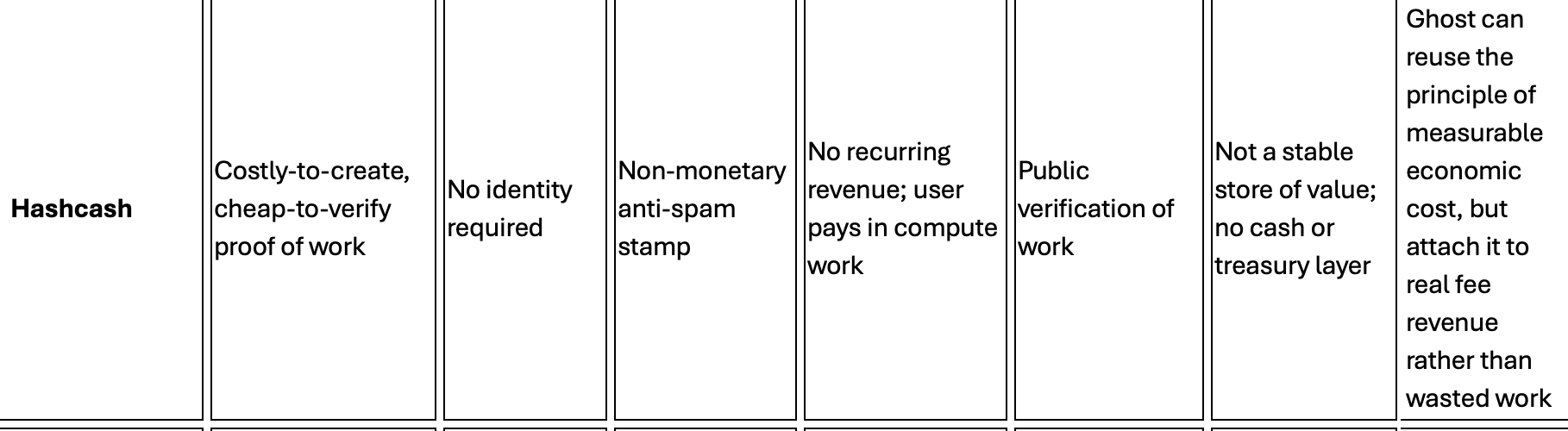
March 1997. Adam Back announces hashcash on the cypherpunks list (The Blockchain History). To send an email, your computer first burns a little processing time on a puzzle. Cheap for one message, expensive for a million. This is proof of work, eleven years before Bitcoin used it.

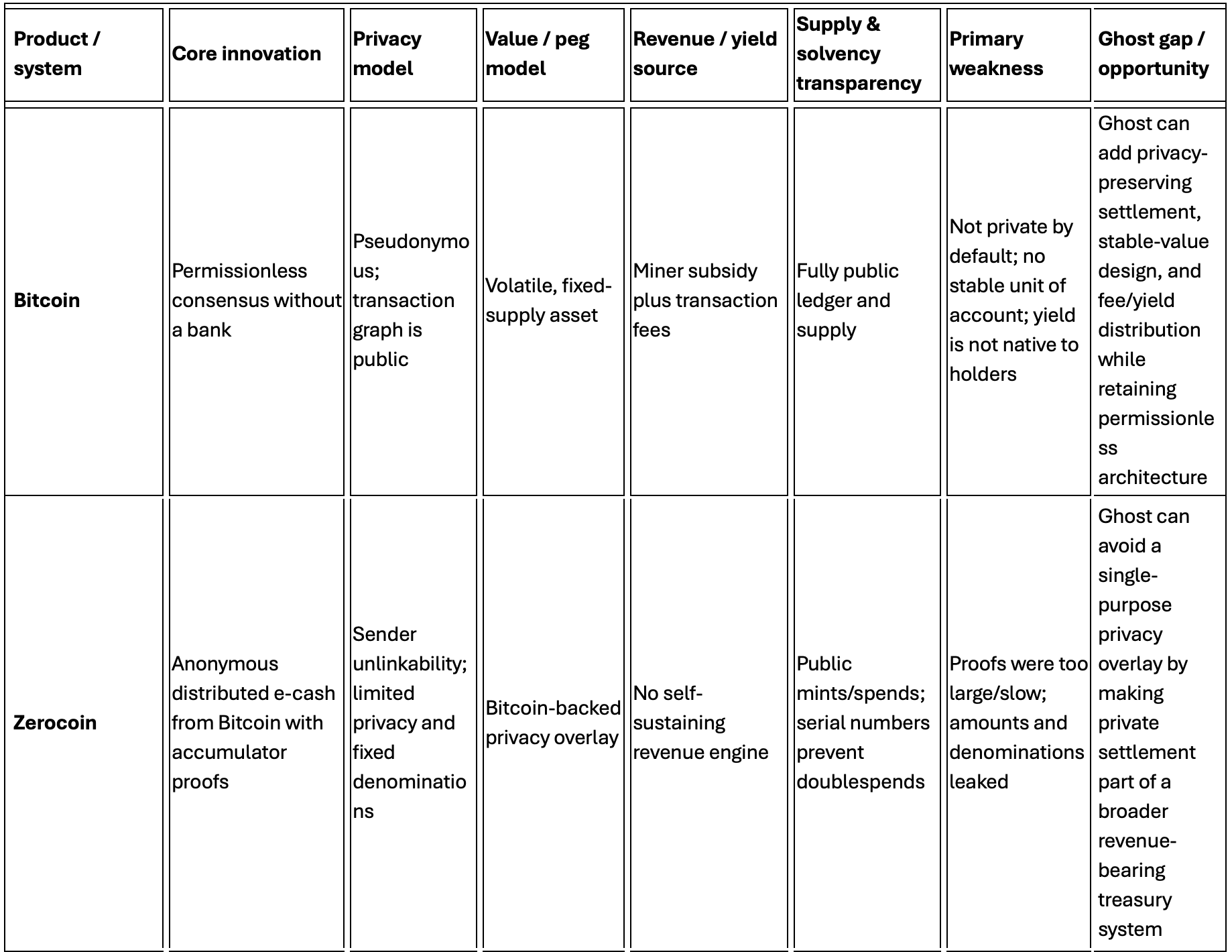
  1. Wei Dai describes b-money and Nick Szabo describes bit gold (The Blockchain History). Both sketch money with no bank in the middle. Neither gets built. The missing piece is how a scattered group of strangers agrees on one shared list of who owns what.

  2. DigiCash goes under (Wikipedia). The math worked. The business needed banks to say yes, and they didn’t.

August 15, 2004. Hal Finney posts RPOW, Reusable Proofs of Work, to the cypherpunks list (original post). A token that costs real computing power to make and can be passed on. Closest thing to Bitcoin yet, but it still ran on one trusted server.

Bitcoin (2008 to 2009)
October 31, 2008. Satoshi Nakamoto emails the Bitcoin white paper to a cryptography mailing list, the descendant of the cypherpunks list (The Block). Hashcash provides the puzzle. Chaum’s digital signatures prove ownership. The new part is the chain: whoever does the most work extends the shared list, so strangers agree without a referee.

January 3, 2009. The first block is mined and the ledger begins (Wikipedia). Hal Finney, from that 2004 post, receives the first transaction.
One catch. Bitcoin hides your name but publishes every payment forever. Match one address to one person and you can read their history backward. That’s the opposite of Chaum’s cash.

Zcash (2013 to 2026)
2013. Matthew Green at Johns Hopkins, with students Ian Miers and Christina Garman, publishes Zerocoin (Grey Area Labs). It uses zero-knowledge proofs, where you prove a statement is true while showing nothing else.
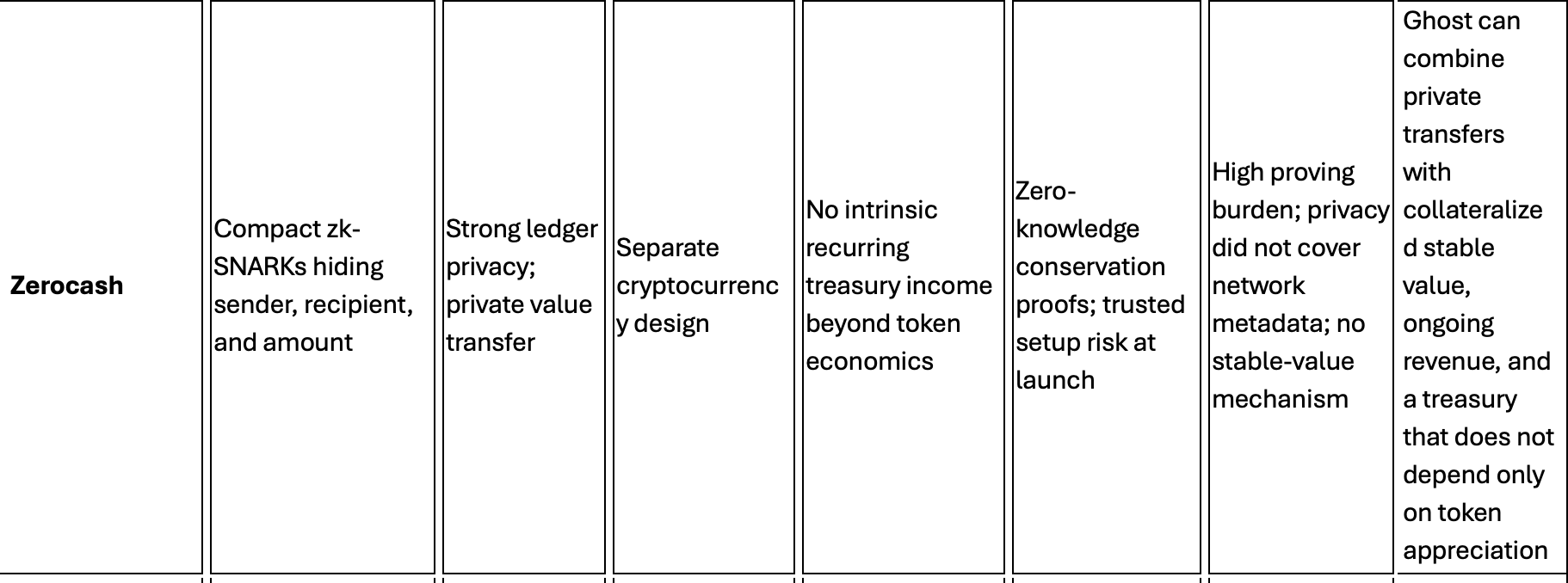
2014. The Zerocash paper shows a blockchain can confirm a payment while hiding the sender, the receiver, and the amount. [zecsite]

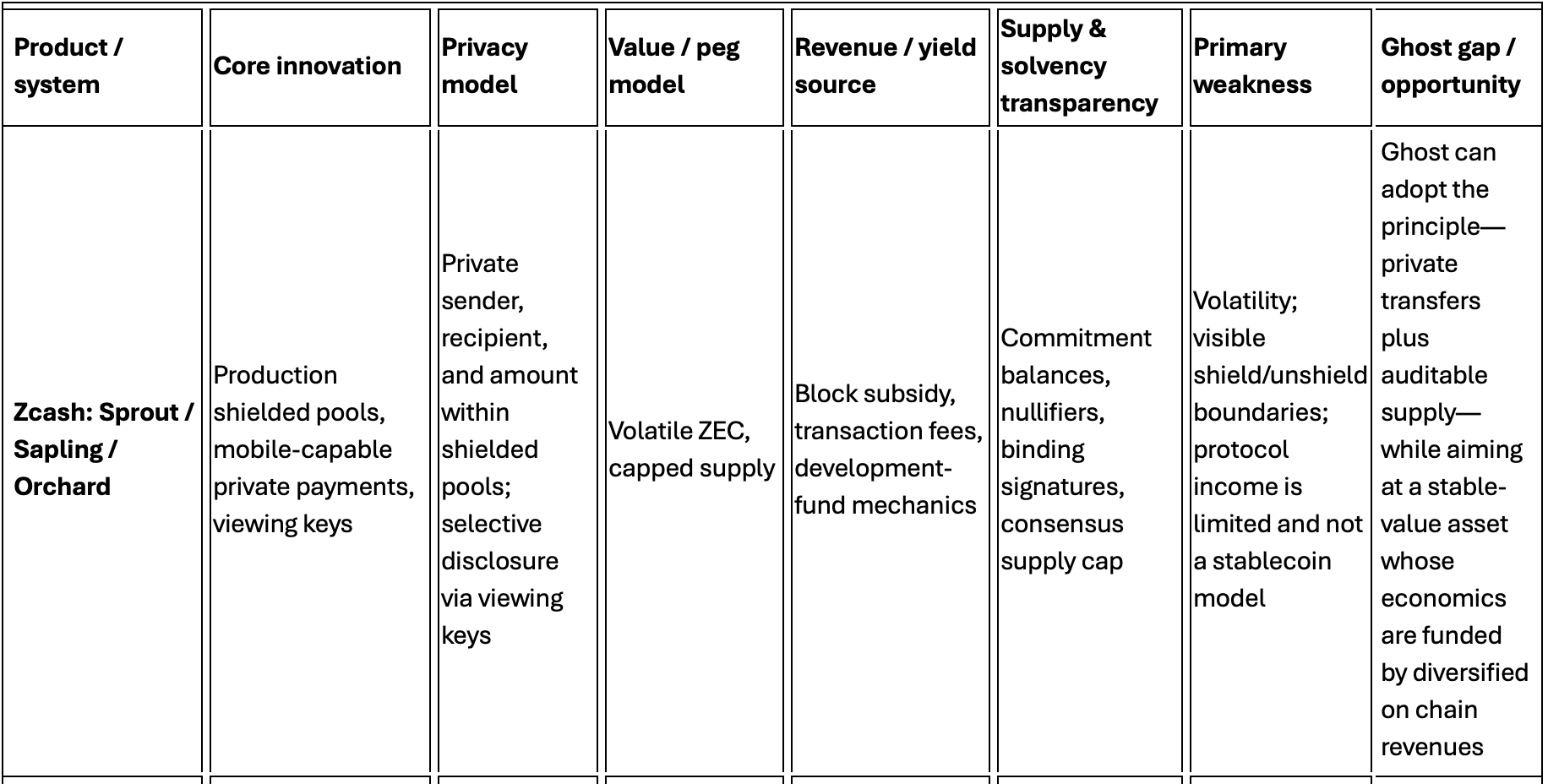
October 28, 2016. Zcash launches with the Sprout shielded pool, the first widespread use of zk-SNARKs. Chaum’s 1983 idea, running without a bank. [zecsite]
October 29, 2018. The Sapling upgrade cuts proof time from minutes to seconds and drops memory needs enough to run private payments on a phone. [zecsite]

May 31, 2022. NU5 brings the Orchard pool, built on Halo 2, which removes the trusted setup ceremony from 2016 and its leftover risk. [zecsite]

May 29, 2026. Taylor Hornby at Shielded Labs finds a soundness bug in the Orchard proof circuit during an AI-assisted review. It had been there since 2022 and could have let someone mint fake ZEC that nobody could spot on the public chain. An emergency soft fork turns Orchard off on June 2, and NU6.2 turns it back on with a fixed circuit on June 3. [zecsite]

July 28, 2026. The Ironwood upgrade activates at block 3,428,143 (CoinDesk). It seals Orchard, which held about 3.66 million ZEC worth roughly $1.7 billion, and opens a new pool called Ironwood that starts empty and is formally verified. Money leaving the old pool has to pass through a turnstile, an accounting gate that makes sure no more coins come out than went in. Users move funds by choice, not automatically. [galaxy]
The thread

Fifty years, one question: can you prove something is true without revealing who you are? Diffie and Hellman made the keys. Chaum made the private coin. Hughes turned it into a movement with a rule about writing code. Back and Finney built the parts. Satoshi assembled them and gave up privacy to get consensus. Zcash spent the next decade buying that privacy back.

Ironwood’s whole point is letting anyone check the coin supply adds up. That’s the same tension Chaum named in 1985: hide the person, keep the books honest.

Ghost’s Moment
Ghost DAO — the next proposed layer. Ghost DAO extends the cypherpunk line by aiming to combine privacy, permissionless settlement, and auditable economic integrity in one system. Where Bitcoin made money independent of banks, and Zcash made transfers private while keeping supply verifiable, Ghost’s proposed role is a privacy-oriented stable-value and treasury layer: users transact privately or with selective disclosure, while the DAO publishes aggregate reserves, issuance, liabilities, and realized protocol revenue. Yield is intended to be variable and funded by real on chain activity; staking, bonding, bridging, settlement fees, and protocol-owned liquidity, rather than opaque bank reserves or token emissions alone.

Chapter Two: The Cypherpunk Manifesto

Who wrote this
Eric Hughes wrote “A Cypherpunk’s Manifesto” on March 9, 1993. He was part of a small group of programmers, math people, and privacy activists who traded ideas on a mailing list. They called themselves cypherpunks: cipher, as in codes, plus punk, as in the attitude.

What they were worried about
Once life moves onto computers, every purchase, message, and login leaves a record somewhere. Hughes points out that you can’t stop a company from talking about you. If a store, a bank, and an email provider each hold a piece of your life, they can compare notes and put the whole picture together.

His answer is to hand over less in the first place. When you buy a magazine with cash, the clerk doesn’t need your name. Your email provider needs to know where to deliver the message and what you owe them, not who you talk to or what you said.
Privacy is not the same as secrecy

This is the line the whole essay rests on. A secret is something you want nobody to know. A private thing is something you want to choose who knows. Hughes calls privacy “the power to selectively reveal oneself to the world”.
So, an anonymous system isn’t a hiding place. It’s a switch you control. You stay unnamed by default and prove who you are when it helps you.

Why they wrote code instead of letters
“Cypherpunks write code.” That’s the most quoted line in the essay, and it’s a strategy, not a slogan.
Hughes says flat out that governments and big companies won’t hand us privacy out of kindness, because it pays them to know things about us. Lobbying for a privacy law only works inside one country’s borders. Working software works everywhere. He wrote that software can’t be destroyed and a widely spread system can’t be shut down.

The cypherpunks built and gave away the tools: encryption, mail forwarding that strips your name, digital signatures, and digital cash. Free for anyone, anywhere. He also shrugs at critics, saying they don’t much care if you disapprove of what they write.

Why they matter
Look at that list of four tools again. Encryption, anonymous forwarding, digital signatures, and electronic money. That’s most of Bitcoin’s parts, written down fifteen years before Bitcoin existed. Satoshi published the Bitcoin paper to a cypherpunk-descended mailing list, and privacy coins like Zcash carry the same idea further: prove a payment is valid without showing who sent it.

The one warning in the essay is that this only works if enough people use it. Hughes says privacy has to become part of the social contract, because your privacy holds only as far as your neighbors cooperate. A privacy tool five people use marks those five people. A privacy tool millions use protects all of them.

because, as Harding puts it plainly, many BIPs are junk.

Chapter 12: Ghost DAO Opportunity
After the review of “From Cypherpunks to Zcash and Beyond” document and the Ghost treasury/compute materials, perhaps our key strategic opening is not merely “another private asset”: Ghost can combine private transferability, a transparent solvency/supply framework, and recurring on chain revenue into a stable-value product whose yield is supported by staking, bonding, bridging, protocol-owned liquidity, and provider/settlement fees.

Some Great tables in the goole drive, compare all the projects. They do not copy well here.
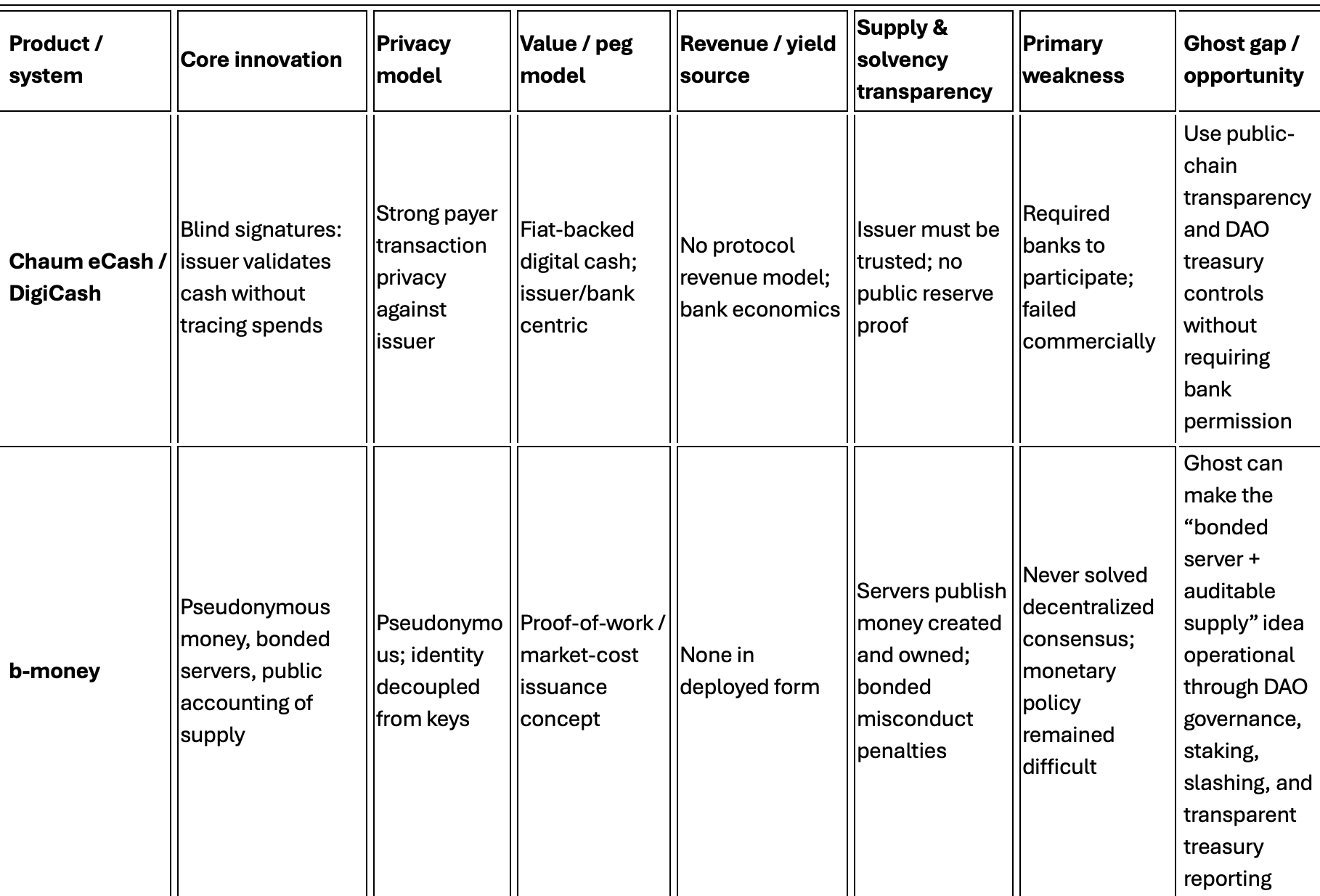
Product landscape
The Ghost gap
The market has repeatedly solved one or two parts of the puzzle, but not all three together:
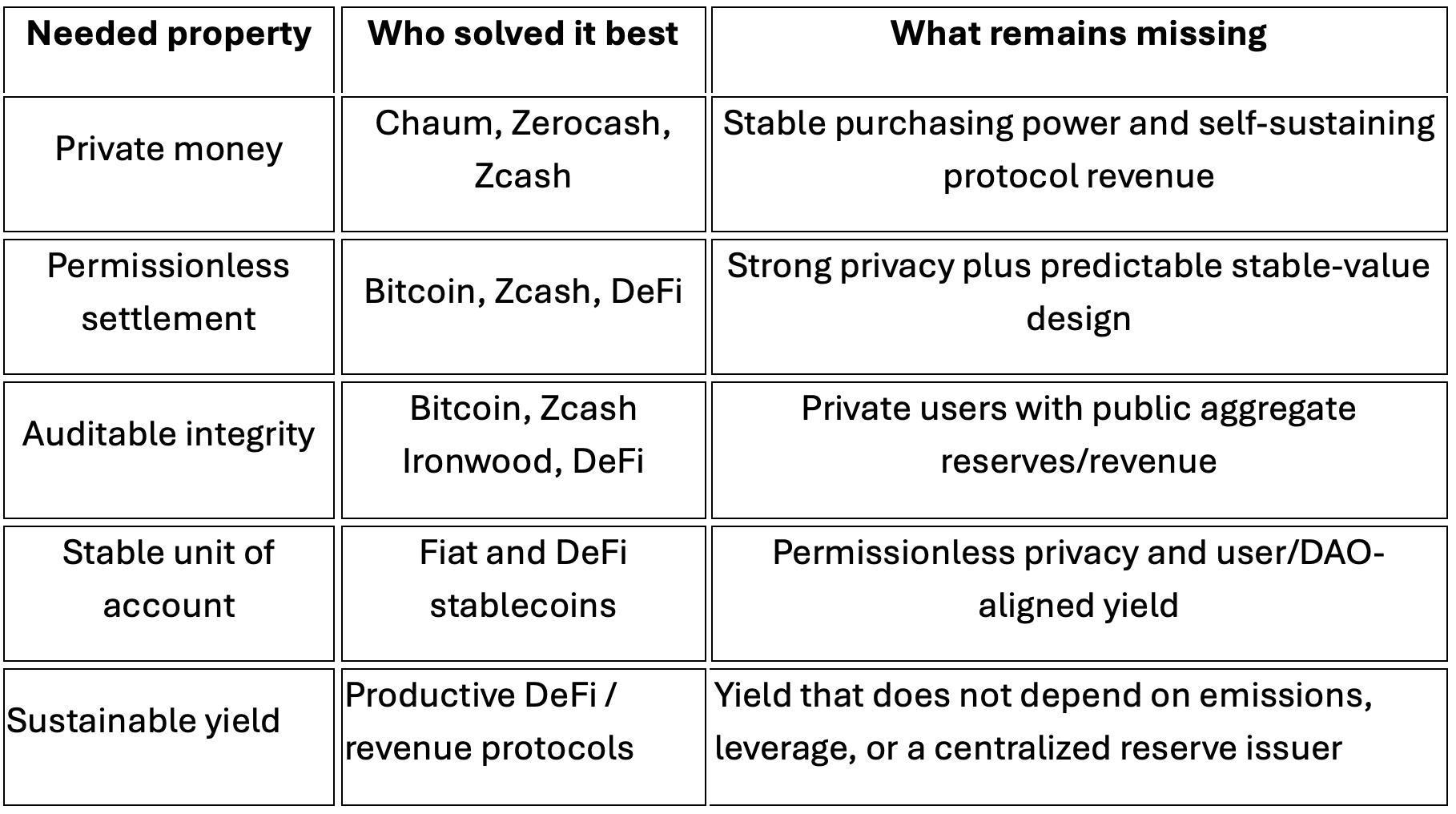
Ghost’s thesis: private users do not need private books. The protocol can protect individual sender, recipient, amount, and balance data while publishing the aggregate numbers that matter; total supply, reserve composition, liabilities, redemption capacity, fee revenue, treasury risk limits, and distribution rules. That is the direct continuation of Chaum’s “security without identification,” Zcash’s private payments with supply integrity, and Ironwood’s turnstile approach to public auditability.

Proposed Ghost design
User layer: private stable-value settlement
• A user holds and transfers a Ghost stable-value asset privately or with selective disclosure.
• Optional viewing keys or disclosure proofs let users share necessary information with an auditor, counterparty, or compliance process without exposing their full transaction history.
• Privacy should be designed around selective disclosure, not “no accountability.” This follows the Zcash viewing-key model described in the source material.
Treasury layer: productive collateral
The stable asset should not claim a peg from GHST appreciation or token emissions alone. Its backing should be explicitly tiered:

  1. Tier 1 liquidity reserve
    Highly liquid stable assets sufficient for defined redemptions and stress scenarios.
  2. Tier 2 revenue-producing collateral
    Conservative, transparent positions that generate on chain fees: protocol-owned liquidity, staking, bonding, bridging/settlement fees, and approved yield strategies.
  3. Tier 3 strategic assets
    Carefully capped exposure to Ghost-native assets, ecosystem tokens, or revenue-sharing partnerships. These can create upside but should not be treated as immediate redemption backing.
    Revenue layer: fee-funded yield
    The economic promise should be narrower and more credible than “high APY”:
    • Yield is variable, never guaranteed.
    • Yield is paid only from realized net protocol revenue after reserves, operating costs, losses, insurance, and liquidity requirements.
    • Ghost DAO governs the split among reserve growth, stablecoin holders/stakers, validators, POL, ecosystem incentives, and the strategic acquisition reserve.
    • Bonding can acquire liquidity and treasury assets at a discount; staking can lock governance and align long-duration capital; bridging and settlement can create recurring fee flows.
    That separates Ghost from emission-subsidized stablecoin designs and from centralized issuers that retain most reserve income.
    Minimum safeguards
    A “first privacy stablecoin sustained by onchain revenue” should be treated as a hypothesis until these conditions exist:
    • No unconditional peg claim until live redemption liquidity, reserve policy, and stress testing exist.
    • No fixed APY promise. Display a trailing realized net yield and a forward distribution policy instead.
    • Proof of aggregate reserves and liabilities on a fixed cadence, with independent attestations where assets leave the chain.
    • Hard exposure caps for volatile GHST and partner-token collateral.
    • Emergency controls governed by transparent DAO rules: pause, unwind, redemption queue, and isolated pool/turnstile procedures.
    • Independent security audits of minting, burning, privacy circuits, bridges, oracles, and fee-routing contracts.
    • Clear separation of assets: user redemption reserves, operating treasury, POL, validator rewards, and strategic acquisition assets cannot be conflated.
    • Compliance and legal review before launch; privacy architecture does not remove regulatory obligations.

Strategic conclusion
The strongest Ghost positioning is not “a private stablecoin with 69% APY.” It is:

A permissionless, privacy-preserving stable-value settlement layer where individuals transact privately, aggregate reserves remain auditable, and variable yield is funded by real on chain revenue from staking, bonding, bridging, settlement, and protocol-owned liquidity.

That is a credible extension of the cypherpunk lineage: Chaum’s privacy, Bitcoin’s permissionlessness, Zcash’s private transfers with supply integrity, and Ironwood’s lesson that privacy systems need visible aggregate accountability. The missing innovation is making those properties work with a sustainable treasury and revenue engine rather than a centralized bank, opaque reserve issuer, or inflationary token subsidy.

Chapter 13 inspired by Frost > Roast> Ghost.

Chapter Thirteen

Ghost Bridge Security

The bridge is where decentralization is usually lost

A private asset can be well designed inside one chain and still become unsafe the moment it needs to move somewhere else. That is the bridge problem.

Most bridges ask users to deposit an asset into a contract or wallet on Chain A, then accept a representation of that asset on Chain B. The hard question is not whether the representation can be minted. The hard question is who, exactly, has the power to authorize it.

Too often, the answer is a small multisignature wallet, a limited committee of operators, a centralized relayer, or a validator group whose real security model is “trust the people holding the keys.” Those arrangements may be convenient. They are not the same thing as trust minimization. A bridge can be decentralized at the interface and still be custodial at its point of failure.

For Ghost DAO, that distinction matters. The project’s purpose is not only to make value more private. It is to make private value usable across systems without asking users to reintroduce a single custodian, a small key-holding club, or an opaque operator between themselves and their money.

The proposed Ghost bridge direction is therefore not “a contract that holds tokens.” It is a threshold-controlled cross-chain execution system: a network of independent authorities that can act together, but where no individual authority can move bridge-controlled assets on its own.

The design goal: collective control, not shared custody

The security target is simple to state and difficult to build.

  • No single validator should be able to authorize a bridge transfer.

  • Compromising one validator, one administrator laptop, one cloud account, or one internal communications channel should not give an attacker control of bridge funds.

  • A valid cross-chain action should require a threshold of independently operating authorities to agree on the same precisely defined message.

  • The receiving chain should be able to verify that authorization cryptographically, without relying on a centralized API or an operator’s statement.

  • The protocol must remain usable when some validators are offline, slow, or malicious.

  • Validator membership and bridge signing keys must be able to rotate without a trusted dealer ever possessing the complete private key.

This does not mean that Ghost removes all assumptions. No cross-chain system does. It moves the security question from “Which custodian should users trust?” to a more explicit set of questions: What threshold is required? How are authorities selected and bonded? What happens when a signer is compromised? How are messages replay-protected? How are key rotations governed? What external-chain finality does the protocol assume? And what evidence can an independent observer verify?

That is a better question because it can be specified, audited, tested, and challenged in public.

One signature, many authorities.

The proposed signing layer uses threshold Schnorr-signature techniques. A normal digital signature proves that one private key authorized a message. A threshold signature lets a group of authorities jointly authorize a message while producing one compact final signature under one group public key.

The destination chain does not need to process a separate approval from every validator. It verifies one signature against the group public key and the exact bridge message. The bridge contract or output script sees an authorization that is compact and inexpensive to check; the Ghost network enforces the group process behind it.

The important property is not concealment for its own sake. It is that authority is distributed before the final signature is created.

Let the validator set contain N authorities and require a signing threshold T. A valid signature can be produced only when at least T eligible authorities participate. An individual authority holds a share, not the complete private key. A minority of compromised authorities should therefore be unable to authorize a transfer, assuming the threshold, key-generation protocol, implementations, and operational controls work as specified.

This is different from putting the same private key into several places. It is also different from a conventional multisig that may reveal individual signers on-chain or rely on a small, static group. The objective is a group-controlled key whose secret is never assembled in one place.

FROST, ROAST, and the proposed GHOST layer

The signing direction builds on established threshold-signature ideas rather than inventing a new signature primitive from scratch.

**FROST—**Flexible Round-Optimized Schnorr Threshold Signatures—provides a way for a defined threshold of participants to create a standard Schnorr signature jointly. Each signer generates carefully bound nonce commitments, computes a partial signature, and contributes it to an aggregate result. The result verifies against the group public key without revealing the private key shares.

ROAST addresses a practical problem in multi-party signing: availability. A signing session should not fail simply because one selected participant is slow, offline, or refuses to respond. The coordinator can use available valid signers until it reaches the threshold, while protocol evidence can distinguish an ordinary failure from a participant that repeatedly aborts a session.

The proposed GHOST layer is an implementation-oriented optimization intended to reduce expensive runtime computation. In the proposed flow, participating authorities compute nonce-binding data locally, commit to that result through a group nonce and Merkle root, and submit Merkle proofs together with partial signatures. The runtime verifies compact commitments and proofs rather than reproducing every large calculation for every participant.

This is a design direction, not a claim that the composition is automatically secure because its ingredients are known. FROST and ROAST have defined security models. Any Ghost-specific signing flow, including the GHOST optimization and its voting or commitment rules, must receive its own formal specification, adversarial analysis, test vectors, and independent cryptographic review before it is treated as production security.

Key creation without a key owner

A threshold bridge still has to answer the hardest custody question: where does the group key come from?

If one person creates the group private key and distributes pieces of it, that person is a trusted dealer and a potential single point of failure. If anyone ever sees the whole key, the bridge has recreated the custody model it claims to replace.

The proposed answer is Distributed Key Generation, or DKG. Each authority contributes secret material. The authorities publish commitments that let others check consistency without learning the secrets. They exchange encrypted shares, verify what they receive, and use a complaint-and-justification process when a share is invalid or withheld. If enough authorities successfully complete the process, they derive:

  • One group public key used by receiving chains to verify bridge actions.

  • One private signing share per surviving authority.

  • One public verification share per authority, used to check that authority’s contribution to future threshold signatures.

No party needs to know the final group secret key. The public key exists. The private key exists only as distributed shares.

The proposed Ghost DKG flow includes commitments, proofs of knowledge, encrypted share distribution using authenticated encryption, validation of received shares, complaint resolution, agreement on a committed verification-share set, and activation of the new key through authorization by the preceding authority set. Its purpose is not merely to create a key once. It is to make the system capable of rotation when authorities join, leave, fail, or are removed.

This is security-critical infrastructure. The DKG protocol must define participant eligibility, deadlines, threshold behavior, exclusion rules, data availability, restart conditions, evidence for disputes, and the consequences of an incomplete rotation. It should not rely on informal operator coordination or a hidden recovery key.

Keeping the chain light without making the protocol opaque

Distributed key generation can generate a large amount of cryptographic data. Public commitments, encrypted shares, proofs, complaints, and justifications grow quickly as the validator set grows. Replicating all of that data into the consensus state of every node can make a protocol slow, expensive, and fragile.

The proposed architecture therefore separates two kinds of data:

Consensus-critical commitments and state transitions belong on-chain: session identifiers, authority-set membership, commitments or roots, votes, proofs needed by the runtime, finalized keys, and the result of each state-machine transition.
  • Large validator-to-validator artifacts may be retained by participating validators in an off-chain index: encrypted shares, commitment payloads, and other data needed to reproduce or contest local calculations.

  • A Merkle root can commit to a large ordered set of verification shares or signing-related data without placing every byte in the global state. A validator can later submit its relevant item with a Merkle proof, allowing the runtime to verify membership in the committed set efficiently.

This architecture is a scalability measure, not permission to treat off-chain storage casually. Off-chain data becomes part of the security and liveness boundary. A production design must specify how that data is replicated, authenticated, versioned, retained, recovered after node loss, and made available during a dispute. A bridge is not trust-minimized if a small group can withhold the records needed to prove what happened.

What a bridge message must prove

A cross-chain signature should not mean merely “move tokens.” It must bind a complete, domain-separated instruction that cannot be replayed, redirected, or reinterpreted on another chain.

For a bridge transfer, a message should bind at minimum:

  • A unique exodus_session or equivalent one-time execution identifier.

  • The source and destination domains, including the relevant chain_id values where applicable.

  • The asset identifier and amount.

  • The intended receiver address in its canonical destination-chain encoding.

  • Any authorized executor or bounty terms.

  • The bridge contract or destination endpoint.

  • A protocol version and message type.

  • A deadline, sequence number, or other explicit replay and expiry control where the protocol requires one.

The receiving contract must reject a session identifier that has already been executed. It must verify the signature against the currently valid group public key or the historically valid key associated with that session. It must reject messages whose chain domain, contract address, asset, function selector, or encoding do not match the signed authorization.

These details are not paperwork. A signature only secures the bytes it signs. If the bytes are ambiguous, under-specified, or reusable in another context, the cryptography is being asked to protect the wrong thing.

EVM execution: verify first, execute narrowly

On EVM-compatible chains, the proposed model uses a gateway contract that verifies a threshold-authorized message and records that its unique session has been consumed. Only after those checks does the contract dispatch a tightly constrained action.

Three action classes are contemplated:

  • Bridge actions, such as minting, releasing, or otherwise accounting for an authorized cross-chain transfer.

  • Key rotation, which updates the group public key accepted by the gateway under a defined, authorized transition.

  • Governance execution, where the authority set may approve defined actions affecting treasury, staking, bonds, or other protocol contracts.

The governance path deserves the strongest guardrails. A signed payload that can trigger an arbitrary ABI-encoded call is effectively a cross-chain root authority. It must not become a generic back door.

A production gateway should therefore use explicit target allowlists, function-selector allowlists, spending and rate limits, timelocks for high-impact actions, separate authority domains for bridge operations and governance, public event logs, emergency pause rules with narrow scope, and independent review of every upgrade path. “The threshold signed it” is necessary, but it is not sufficient policy.

Contract upgrades require the same care. A linked history of gateway contracts may preserve the ability to settle legacy sessions, but upgrade routing must be bounded, observable, and independently auditable. Historic verification support must never become an unbounded call chain or a way to reinterpret old authorizations under new rules.

Privacy does not remove accountability

Ghost DAO’s larger thesis is that users should not have to choose between privacy and integrity. The bridge should follow the same rule.

A bridge does not need to publish a person’s complete transaction history to prove that it is operating within its authorized limits. It can publish aggregate bridge balances, mint-and-burn totals, outstanding liabilities, reserve policy, validator-set changes, key-rotation events, executed sessions, and protocol revenue without turning every participant into a transparent account.

Where selective disclosure is appropriate, it should be scoped and consent-based. A user may choose to provide a proof, viewing authority, transaction receipt, or other limited record to an auditor, counterparty, or service provider. That is different from routing all bridge users through default identity collection or making universal transaction surveillance a condition of use.

The public assurance target is aggregate integrity:

  • No more destination-chain representation should be created than the bridge rules authorize.

  • No bridge action should execute twice.

  • No authority change should become valid without the required prior authorization and protocol checks.

  • No treasury or governance action should exceed its stated mandate.

  • The system’s aggregate assets, liabilities, issuance, and realized revenue should be explainable through public commitments, on-chain records, and defined attestations.

  • Individual privacy and public solvency are different problems. Ghost should specify each separately rather than treating one as proof of the other.

Threat model and non-claims

The bridge’s purpose is to reduce concentrated custody risk. It does not make risk disappear.

The system must be evaluated against at least the following threats:

  • A validator’s signing environment, host, cloud account, or operator credentials are compromised.

  • Multiple validators collude or are controlled by one economic or organizational actor.

  • Validators refuse to participate, selectively censor requests, or attempt to stall DKG and signing sessions.

  • Authorities submit inconsistent messages, nonce data, commitments, or key-rotation inputs.

  • Off-chain DKG or verification data is withheld, lost, corrupted, or made unavailable after a validator restart.

  • A source chain reorganizes after an action is observed but before the bridge’s assumed finality boundary.

  • A destination-chain contract contains a verifier, parsing, upgrade, authorization, or accounting bug.

  • A signed message is replayed across testnets, mainnets, contracts, assets, or protocol versions.

  • Governance captures the validator set, changes execution policy, or routes authority through an unsafe upgrade.

  • Validator software, cryptographic libraries, build pipelines, RPC dependencies, hardware, or operational communications are compromised.

Accordingly, Ghost does not claim that a threshold signature alone makes a bridge “trustless,” that privacy makes a treasury solvent, or that a cryptographic design eliminates the need for audits and operations. Security is a system property. It depends on the protocol, the implementation, the validator economics, the deployment process, the governance constraints, and the behavior of the external chains the bridge connects.

The proof standard

The cypherpunk lesson is not to believe in a system because its story is good. It is to verify the system because the stakes are high.

Before Ghost bridge security is described as production-grade, the project should publish and maintain:

  • A complete protocol specification with canonical encodings and state-machine rules.

  • A clear threat model and security assumptions for every chain and validator set.

  • Formal or machine-checked analysis where practical, especially for novel protocol modifications.

  • Independent cryptographic review of the threshold-signature composition, DKG flow, and any Ghost-specific optimization.

  • Independent smart-contract audits for every gateway and upgrade mechanism.

  • Reproducible test vectors, interoperability tests, fuzzing, simulation, and adversarial testing results.

  • Validator admission, concentration, bonding, slashing, compensation, and removal rules.

  • Data-availability, backup, recovery, and incident-response procedures for off-chain protocol artifacts.

  • Conservative bridge limits, monitoring, circuit breakers, and staged rollout evidence before expanding custody.

  • A public vulnerability-disclosure and bug-bounty program.

The project should make precise claims that can be checked. “A threshold of authorities must sign a domain-separated, replay-protected message before a supported gateway executes it” is a meaningful claim. “The bridge cannot be broken” is not.

The connection to Ghost DAO

Ghost DAO is not trying to recreate a bank behind a privacy label. Its proposed role is to combine private or selectively disclosed value movement with auditable economic integrity: reserves, issuance, liabilities, treasury policy, realized protocol revenue, and cross-chain obligations that can be examined without publishing every user’s financial life.

The bridge is essential because a stable-value asset that cannot move is not useful enough, while an asset that moves only by trusting a small custodial committee has surrendered its central promise. Threshold-controlled cross-chain execution is the attempt to hold both sides of that equation at once.

The claim is not that Ghost has solved cross-chain security by naming the right cryptographic tools. The claim is narrower and more serious: bridge custody should be distributed, authorization should be specific and publicly verifiable, validator power should be bounded by cryptography and governance rules, and every design choice should be open to independent verification.

That is the next problem in the line that began with Chaum. Prove that a transaction is valid without exposing the person. Prove that money is accounted for without putting every balance on display. And prove that value can cross systems without silently handing control back to a gatekeeper.

Ghost’s bridge architecture is a proposal to take that problem seriously.

2 Likes

That’s a fantastic and deeply informative breakdown of the protocol! Thank you for putting this together.

To help enrich your post even further, here are a few clarifications and additions:

Bridging: Protocol Owns Everything

On the EVM side, there is no traditional “lock-and-send” mechanism for GHST tokens. Instead, because the Staking contract already owns the underlying eGHST and simply issues a record of GHST to the user, there is no need to transfer anything. The protocol holds all the tokens while granting access rights to the user.

When a user bridges in, the protocol simply burns those tokens (since they belong to the protocol anyway) and triggers the Weaver protocol to update the bridging Merkle Root for validators on the destination chain. To keep the balance sheet correct, the Staking smart contract increases the ghostedSupply. This ensures that when upcoming rebases occur, any accrued APY from the EVM chain is preserved and travels with you.

When bridging back, the only validation the Staking contract needs to perform is ensuring the withdrawal amount does not exceed the ghostedSupply. It then minting the tokens and decreases the supply metric accordingly as control shifts back to the user. It is possible because technically all GHST supply belongs to the protocol.

Missed Honorable Names

While your list is great, a couple of legendary names deserve a quick shoutout for making all of this possible:

  • Adi Shamir: The brilliant mind behind Shamir’s Secret Sharing. He also gave the world the Straus-Shamir trick, which drastically optimizes scalar multiplications in Elliptic Curve Cryptography (ECC).
  • Ralph Merkle: The greatest “forester” in computer science. Without Merkle Trees, blockchains as we know them simply wouldn’t exist. They truly are the Holy Grail of blockchain proofs.

That being said, as I write this, I realize the list of pioneers is nearly infinite. Your curated selection is absolutely fine as it is, but adding these might give it that extra edge!

Thank you for this feedback. I will modify the ghost chapter to reflect your comments. The google doc is open to anyone who wants to contribute directly or make comments, add a chapter like Olymous DAO or Polkadot Governance perhaps.